Freshness and First Impressions Are Everything
Moisture is a defining challenge in bakery packaging. Too much and a crisp cookie goes soft. Too little and an artisan loaf arrives at retail dry and stale. Unlike frozen food where cold temperatures help preserve, baked goods depend almost entirely on packaging to maintain the texture and freshness that consumers expect. Get the barrier properties wrong and the product that arrives on shelf isn’t the product that left the bakery.
Presentation is equally high-stakes, and in bakery it means something different than in other food categories. It’s not just about showing the product through clear film, though that matters too. It’s about the overall look and feel of the package communicating what the brand stands for. A shiny metalized finish signals premium. A high-gloss clear bag signals freshness and quality. A resealable closure signals convenience and care. Consumers make these judgments in seconds, and packaging that doesn’t match the quality of the product inside leaves value on the table.
Getting both of these right — freshness protection and brand presentation — while also meeting sustainability requirements and running efficiently on a production line, is where bakery packaging gets genuinely complex.
What You’re Up Against
Freshness is the central challenge in bakery packaging. Unlike frozen food, baked goods have short shelf life windows that leave little room for packaging that doesn’t perform. Moisture is the primary threat, either escaping and leaving products dry and stale, or entering and softening products that depend on texture for their appeal. The right barrier properties aren’t optional; they’re the difference between a product that delights and one that disappoints.
Grease resistance is another issue that’s easy to overlook until it becomes a problem. Many baked goods are high in fat — croissants, muffins, cookies, pastries — and packaging that isn’t designed to resist grease migration can compromise both the appearance of the package and the integrity of the film itself.
Shelf life extension through better packaging has a direct impact on profitability, reducing write-offs, extending distribution windows, and giving retail partners the confidence to carry your products. Farnell’s Full Picture Packaging approach means we’re looking at barrier performance, sustainability, production line compatibility, and brand presentation together, because a solution that solves one of these without addressing the others rarely holds up.
Packaging Solutions Built for You
Bakery packaging has to balance freshness protection, shelf presence, production line performance, and sustainability. Farnell works with bakery brands to find solutions that serve all of these needs, recommending formats and materials based on your specific product, equipment, and retail requirements.
Wicketed Bags
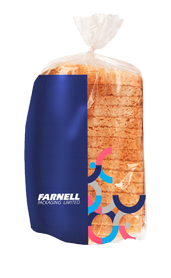
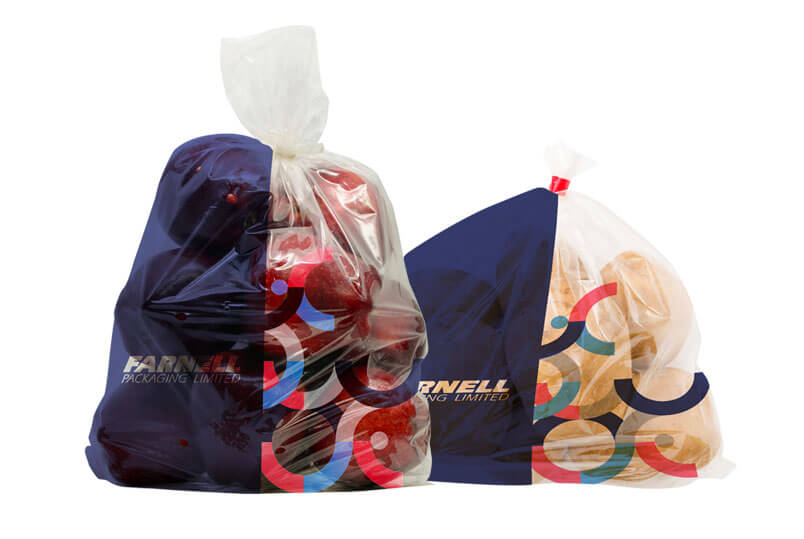
Wicketed bags are a proven format for high-speed bakery operations. High clarity and high gloss, they showcase your baked goods while providing a reliable, production-friendly solution compatible with automatic filling equipment. For bakery brands running volume and looking for a format that performs consistently on the line, wicketed bags are a natural starting point.

Side-Weld Packaging
Side-weld bags offer a flexible, accessible format for bakery operations that fill by hand or run semi-automated lines. Similar in clarity and presentation to wicketed bags, side-weld packaging is a practical choice for smaller runs, specialty products, and operations that need versatility without compromising on presentation.

Metalized Packaging
For bakery products that need UV protection or a premium shelf presence, metalized packaging is a standout option. Standard polyethylene film with a thin layer of aluminum applied, metalized packaging protects light-sensitive products while delivering a shiny, distinctive finish that commands attention on shelf. Available as wicketed bags, rollstock, and pouches, it’s a format that earns its place both functionally and visually.
Zippers and Closures
Zippers and closures can be added across bakery packaging formats, giving consumers a resealable option that extends in-home freshness and adds a premium feel to the overall package. For products like cookies, crackers, and snack items where consumers dip in and out over time, resealability is an expectation as much as a feature.
The Proof Is Baked In
Great bakery packaging requires a supplier who understands what’s at stake: freshness, presentation, and production performance all at once. Farnell brings that understanding to every project, along with a commitment to the same food safety standards our customers are held to.
We hold IFS PACsecure and ISO 9001:2015 certifications, and we’re members of both the Carbon Disclosure Project and the Sustainable Green Printing Partnership, reflecting our commitment to quality, safety, and sustainability across everything we do.
Frequently Asked Questions
Wicketed bags are the most common choice for automated bakery filling operations. They’re designed for compatibility with automatic filling equipment, offer high clarity and gloss for strong retail presentation, and run consistently at volume. For operations with semi-automated or manual filling, side-weld bags offer similar presentation benefits with more flexibility. Your Farnell specialist can help determine the best fit based on your equipment and line speed.
Shelf life in bakery comes down to moisture management. The right film structure creates a barrier that controls moisture migration, keeping products that should be dry and crisp from going soft, and products that depend on moisture retention from drying out. Seal integrity is equally important; even a high-performing film won’t deliver its potential barrier properties if the seal isn’t consistent. Farnell evaluates both film selection and seal performance for each application.
Metalized packaging is a polyethylene film with a thin layer of aluminum applied to the surface. It provides UV protection for light-sensitive products, offers a shiny premium finish that stands out on shelf, and is available in wicketed bag, rollstock, and pouch formats. It’s a particularly strong option for bakery brands looking to differentiate on shelf or for products where light exposure is a freshness concern.
Yes, but the transition needs to be validated properly. Sustainable films can perform differently than conventional alternatives in terms of barrier properties, seal strength, and how they run through existing equipment. Farnell’s senior packaging engineers conduct site visits and production test runs before any transition to ensure new materials perform to spec on your line. We’ve managed many of these transitions and know where the common challenges are. For a broader look at Farnell’s sustainable packaging options, visit our sustainability page.
The easiest first step is a conversation with one of our specialists. We’ll review your current packaging setup, identify any gaps or opportunities, and recommend a practical path forward based on your product, production environment, and goals.